
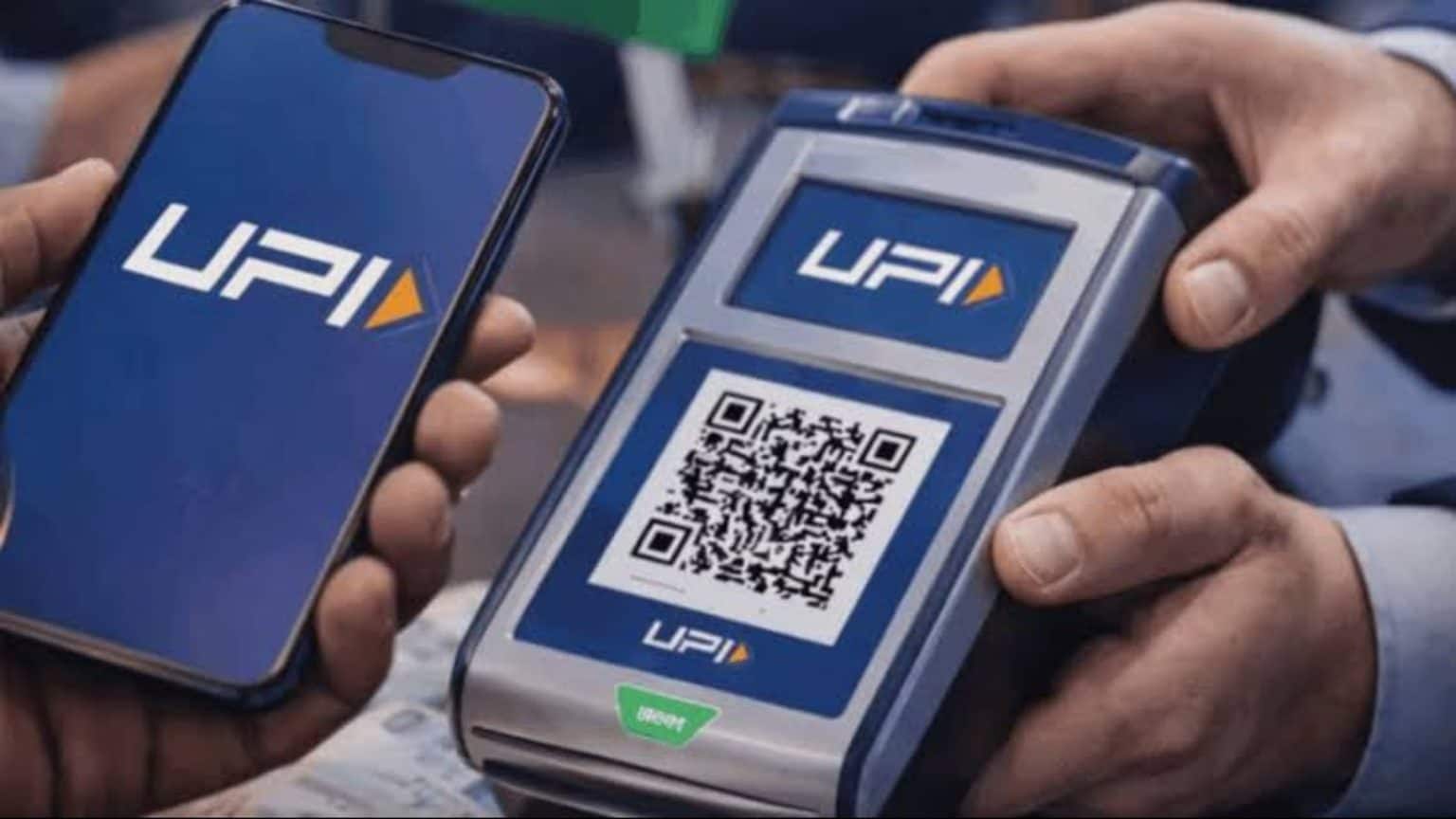
One of the major achievements that India has proudly presented to the world over the past decade is the Unified Payments Interface—UPI. From small shopkeepers to large traders, from farmers to laborers, and from students to pensioners, millions of Indians today use this system.
But now a question has arisen—is the government opening the door to directly or indirectly charging citizens for using the very digital payment system it brought them into?
The Finance Ministery has introduced the Taxation & Other Laws Amendment Bill 2026 in parliament proposing changes in section 10 A of the Payment & Settlement Systems Act 2007. While introducing the Amendments government has clarified that no charges will be levied on Person-to-Person UPI transactions for ordinary users, and even if MDR is introduced in the future, it will be limited to certain merchant transactions and nominal in nature. However, recent policy changes may open the way for imposing a Merchant Discount Rate—MDR on selected merchant UPI transactions. According to reports, the final structure of the fee has not yet been decided.
Therefore, the real question today is not simply “0.3% or 0.5%?”
The real question is
Is the digital payment system a public infrastructure, or a marketplace offered for profit-making?
Banking is No Longer Just a Business
In the modern economy, banking is no longer limited to accepting deposits and giving loans. Salaries, pensions, scholarships, subsidies, social security, insurance, tax payments, government scheme benefits, DBT, and commercial transactions—almost every part of a citizen’s financial life is now linked to the banking system.
Therefore, banking and payment systems have become a Public Utility Service.
It would not be appropriate to charge citizens for every kilometer of road they use in the name of profit. Similarly, essential services like drinking water, public transport, railways, electricity distribution, and public healthcare cannot be viewed purely through a profit lens.
Likewise, the national digital payment network is also a 21st-century economic infrastructure.
Its basic cost must be borne by the government and the broader financial system.
The Government Itself Brought Citizens into the Digital System
From demonetization to Jan Dhan, Aadhaar, mobile connectivity, DBT, and Digital India, the government has run massive campaigns to bring citizens into formal banking and digital payment systems.
Citizens were repeatedly encouraged to move away from cash and adopt digital transactions.
Small shopkeepers installed QR codes. Vegetable vendors began accepting UPI. Auto drivers started taking digital payments. Even rural citizens began conducting financial transactions through smartphones.
For this transformation, citizens also bore costs—smartphones, internet data, digital literacy, and the risk of cyber fraud.
And now, once this system has become indispensable, gradually commercializing it would amount to a policy betrayal of trust.
Notably, in March 2025, the government itself approved a ₹1,500 crore incentive scheme and decided to provide a 0.15% incentive for UPI transactions up to ₹2,000 for small merchants. This shows that the government had already accepted the principle that the cost of digital payments should be borne through public funds due to their social and economic benefits. So why move away from that principle now?
Fee on Merchants’ Does Not Mean No Cost to Consumers
The government may argue that the proposed MDR will not be charged to customers but only to selected merchants.bTechnically, that may be correct. But economics tells a different story. A transaction cost imposed on merchants is often passed on, at least partially, to consumers through higher prices of goods and services. Therefore, the question is not only “who pays the fee?” but also “who ultimately bears the economic burden?”
And in most indirect cost structures, the final burden tends to fall on ordinary consumers.
Today Big Merchants; Tomorrow Every Transaction?
Today it may be said that the fee applies only to large merchants.
Tomorrow the threshold may change. The day after, the minimum transaction value may be reduced.
Later, the rate may increase.vAnd once the principle that “charging for UPI transactions is valid in principle” is accepted, administrative or legal changes alone will be enough to expand it in the future. Therefore, today’s struggle is not about 0.3% or 0.5%. It is about whether UPI will remain a public digital infrastructure or gradually become a fee-based marketplace.
UPI is Not Free—Society Already Pays for It
A misconception is often created that because UPI is free, someone must be bearing its cost and therefore users or merchants must pay. Of course, digital infrastructure has costs. Servers, data centers, cybersecurity, telecom networks, fraud monitoring, grievance redressal, and settlement systems—all involve expenditure. But just because roads cost money does not mean toll booths are placed on every street.bHaving a cost for public infrastructure and charging per-use commercial fees are two different things.
The government should directly support the banking and NPCI-based public payment system through budgetary allocations. This is not a subsidy but a public investment in Digital Public Infrastructure.
Banks Also Benefit Significantly from Digital Transactions
It is a one-sided argument to say that digital systems only impose costs on banks. Digital transactions reduce cash handling, counting, reconciliation, transportation, ATM cash replenishment, and other manual processes. At the same time, digital transactions keep customer money within the formal banking system for longer periods.
CASA deposits and transaction balances are important low-cost resources for banks. Therefore, when discussing costs, one cannot only account for IT infrastructure expenses. The indirect financial benefits to the banking system must also be considered. Hence, the government should conduct a transparent Digital Payments Social Cost–Benefit Audit.
Service Charges Are Not Limited to UPI
The issue is not limited to UPI alone.
Bank customers are charged various fees—account services, certain ATM transactions, cheque-related services, alerts, cards, and other facilities. Each fee may appear small individually. But the question is of principle. If banking is essential for daily life, is it justified to turn basic banking services into profit centers? Our answer is clear—no. Basic banking services should be treated as a citizen’s financial right.
The Question of Economic Sovereignty
This debate also has an international dimension. UPI and RuPay have given India the ability to build its own digital financial infrastructure, reducing dependence on international card networks and payment corporations. This raises the question of economic sovereignty.
In the context of India–US trade discussions, there is political debate about foreign commercial interests influencing payment systems.
India’s public digital payment policy should not be subject to pressure from any foreign government, multinational card network, or global financial corporation. The official statement on India–US trade agreements mentions market-access commitments. Therefore, any changes in digital payment policy must be made with full transparency.
Parliament and the government must clearly state—
UPI, RuPay, and India’s Digital Public Infrastructure will not become bargaining chips in trade negotiations.
Digital Sovereignty is Not Just Data Sovereignty
Digital sovereignty does not only mean that Indian citizens’ data remains in India. It also mean India’s payment architecture must remain under public control; its rules must be determined by the Indian Parliament, regulators, and public interest; and multinational corporations must not gain undue control over the economic value generated by millions of transactions. Payments infrastructure is the backbone of economic sovereignty.
Digital Transactions and ‘Money Float’
Digital payments increase transaction speed and keep money circulating within the formal financial system, improving efficiency.
However, it is important to understand one economic point carefully.
Faster UPI transactions increases money supply or cause inflation. Inflation depends on monetary policy, credit creation, government spending, supply conditions, import prices, wages, demand, and many other factors however, digital systems do change transaction velocity, financial formalization, and the usage pattern of banking liquidity.
The key political economy question is who benefits from the resulting productivity gains and cost savings.
If fintech companies, payment aggregators, and large financial institutions capture these gains while costs are passed on to ordinary citizens, it is unacceptable.
What is the People-Centric Alternative?
There is a cost to running UPI. Financial arrangements are necessary. But the solution does not have to be User Pays. We can adopt a Public Infrastructure Model.
1. Maintain Zero-MDR on UPI
Zero MDR should be protected as a public policy not only for person-to-person transactions but also for basic merchant UPI transactions.
2. Establish a Digital Payments Infrastructure Fund
A dedicated fund involving the central government, RBI, and banking system should finance UPI infrastructure, cybersecurity, fraud prevention, and grievance redressal.
3. Make Basic Banking Services Free
A Basic Banking Services Charter should be created covering savings accounts, basic debit cards, reasonable ATM access, UPI, NEFT/IMPS, and essential banking services.
4. Strengthen Public Sector Banks
The contradiction of burdening PSBs with financial inclusion costs and then judging them solely on profitability must end.
The government should compensate public sector banks for their social banking responsibilities.
5. Preserve the Public Nature of NPCI
India’s payment backbone must not be opened to commercial control by multinational financial corporations.
6. Full Parliamentary Debate
Any fundamental change in payment fee policy must be preceded by parliamentary discussion.
7. White Paper on Foreign Pressure
The government should clarify whether India’s payment architecture or MDR policy has been part of trade negotiations with the US or other countries.
8. Mandatory Consumer Representation
Payment policy must include representation from consumer groups, trade unions, small traders, farmers, and civil society along with banks and fintech companies.
‘Public Money for Public Welfare’
At the heart of this issue lies a fundamental ideological conflict.
Essential infrastructure required for social and economic development must be universal, affordable, and where possible, free as a responsibility of the welfare state.
UPI is not merely a fintech achievement.
It is a national digital asset created through public policy, public institutions, the banking system, technology, and most importantly, the participation of millions of citizens.
No toll gate should be erected around this national asset.
If We Do Not Speak Today... Every fee begins small.
First on large transactions.
Then on large merchants.
Then thresholds change.
Then fees become normal. And after a few years, citizens are told—
“This is the inevitability of the market.”
But this is not inevitability. It is a policy choice.
Therefore, the question of UPI charges is not just about digital payments. It is about public property, consumer rights, financial inclusion, economic sovereignty, and the nature of the welfare state. If India truly wants to become a digital superpower, its digital infrastructure must not become a rent-extraction mechanism for a few corporations.
It must evolve as a Digital Public Good.
Roads connect economies.
Railways connect the nation.
Electricity powers production.
Water sustains life.
And in today’s world, banking and digital payment systems connect the entire economy.
Therefore, their basic infrastructure cost must be borne collectively by society through the government—not recovered from citizens at every transaction.
No Toll on UPI!
No Unnecessary Charges on Basic Banking Services!
No Commercialization of Digital Public Infrastructure!
Prioritize Public Interest over Multinational Financial Interests!
Protect India’s Digital and Economic Sovereignty!
Public Money—For Public Welfare!
Digital India—not for corporate profit, but for citizens’ rights!
Devidas Tuljapurkar Chairman Banking Education Training Research Academy